Find the cause first
Probe soft depressions and watch them after rain. Settlement over old roots, poor construction, mole activity, leaking drains and compacted service trenches need different remedies. Mark high and low spots after mowing short enough to read the surface.
- Check whether hollows hold water
- Look for ongoing animal activity
- Do not conceal drainage or subsidence problems with topsoil
- Check for cables and pipes before deep excavation
Topdress shallow unevenness
For minor dips, apply a dry, compatible sandy loam topdressing in thin layers while grass is growing strongly. Work it into the canopy with a lute, stiff broom or the back of a rake, leaving leaf tips clearly visible. Repeat later rather than smothering the grass.
- Mow and scarify lightly if the surface is thatchy
- Fill no more than roughly 10–15 mm in one pass
- Brush material off leaves
- Water if conditions are dry
- Overseed thin areas with a matching seed mixture
Repair deeper hollows and bumps
For a local hollow, cut turf on three sides, fold it back, add and firm screened topsoil, then relay at the surrounding height. For a bump, lift the turf and remove soil beneath it. Large-scale regrading is best done during renovation, not by repeatedly burying the existing surface.
- Firm in stages to reduce future settlement
- Keep replaced turf moist until rooted
- Use a long straightedge to check progress
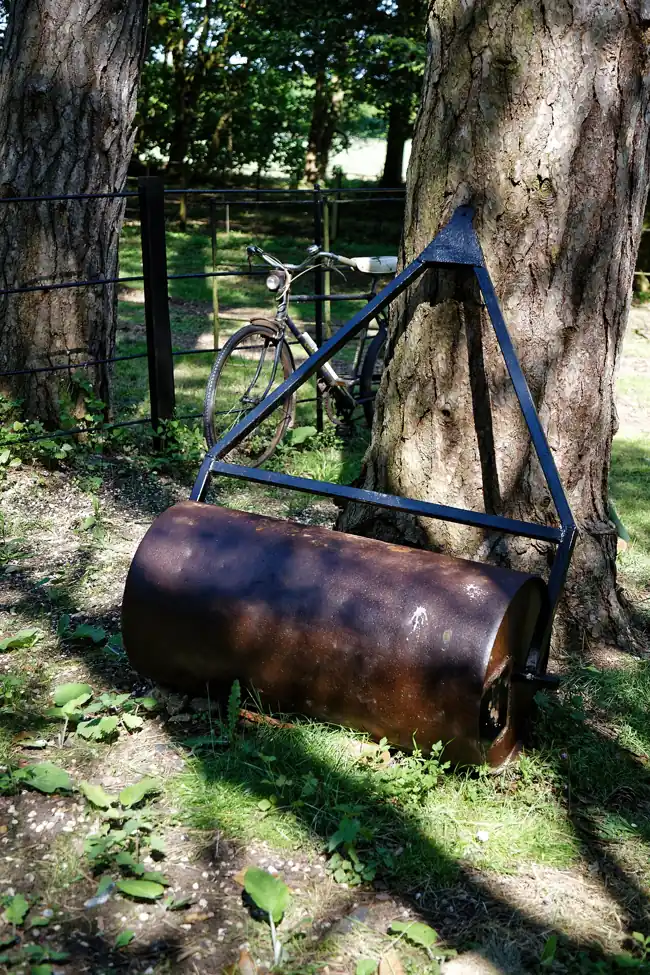
- A heavy roller does not permanently flatten poorly prepared soil and can worsen compaction