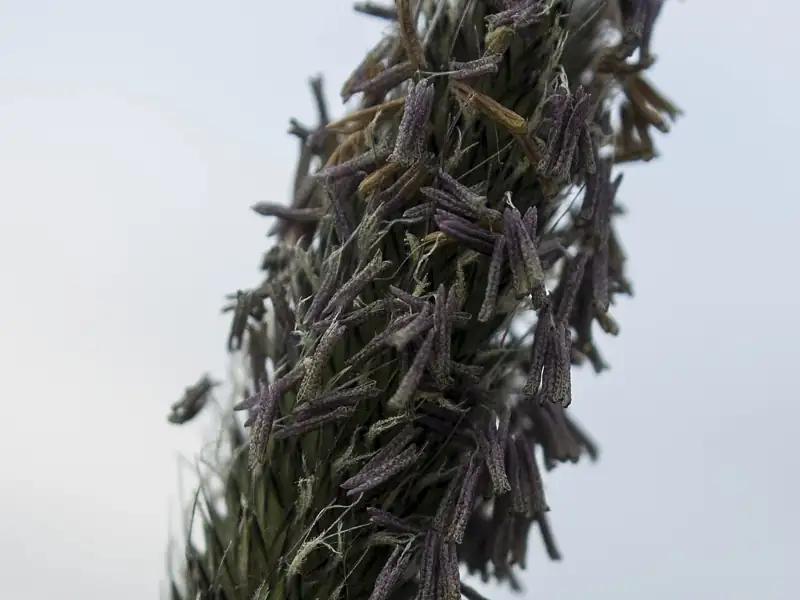
Know what is in the mixture
Most lawn seed is a blend. Perennial ryegrass germinates quickly and tolerates feet, children and pets. Red fescues have finer leaves and cope with lower fertility. Browntop bent creates a dense, fine surface but asks for closer mowing and more attention. Smooth-stalked meadow-grass spreads by underground stems and repairs well once established, but germinates slowly.
- Hard-wearing family lawn: ryegrass-led mixture
- Shade: red and hard fescues with some bent; avoid expecting success in deep, dry shade
- Fine ornamental lawn: fescue and bent, with little or no ryegrass
- Drought-prone site: hard fescue and deep-rooting cultivars
When and how much to sow
Early autumn is usually the easiest sowing window in the UK: soil is warm, rain is more reliable and weed pressure is falling. Spring is the second choice, once soil has warmed. Seed needs contact with moist soil—not a burial.
- New lawn: normally 30–40 g/m²; follow the pack rate
- Overseeding: normally 20–30 g/m²
- Rake to a fine, firm tilth and remove stones
- Split the seed in half and sow in two directions for even coverage
- Lightly rake, firm with feet or a roller, then water with a fine rose
Germination without guesswork
The upper centimetre of soil must stay consistently damp until seedlings establish. On a dry day that can mean several light waterings; in cool damp weather it may mean none. Ryegrass may show in 7–14 days, while fescues and meadow-grass can take considerably longer.
- Use a fine spray so seed is not displaced
- Keep people and pets off the area
- Make the first cut when most grass reaches roughly 7–8 cm
- Use sharp blades and remove no more than one third